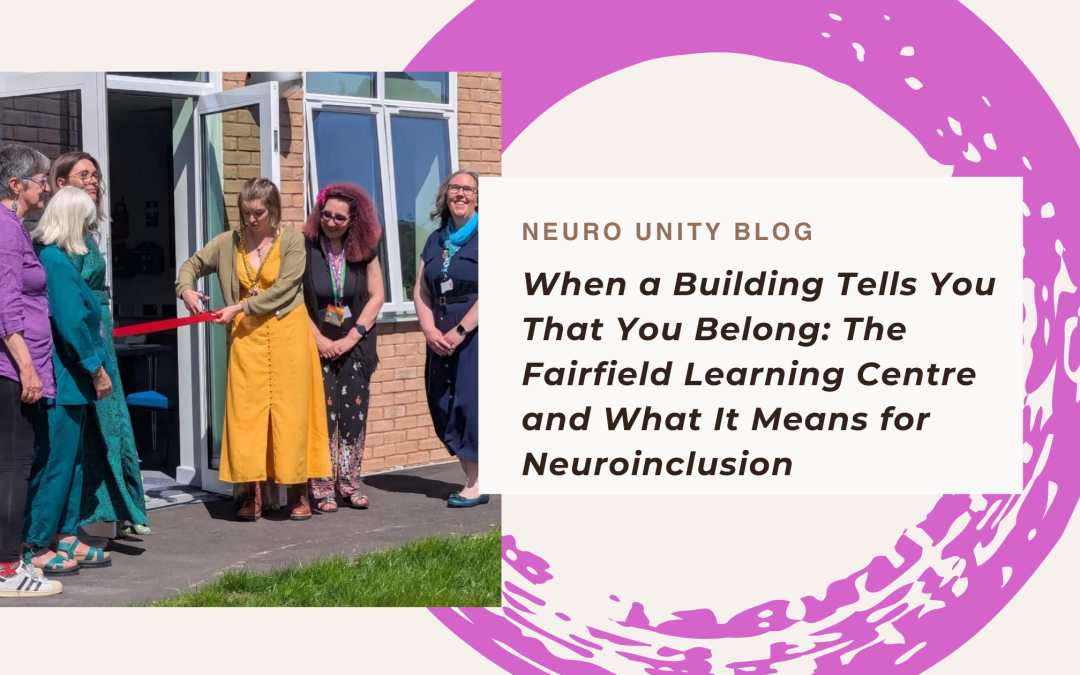
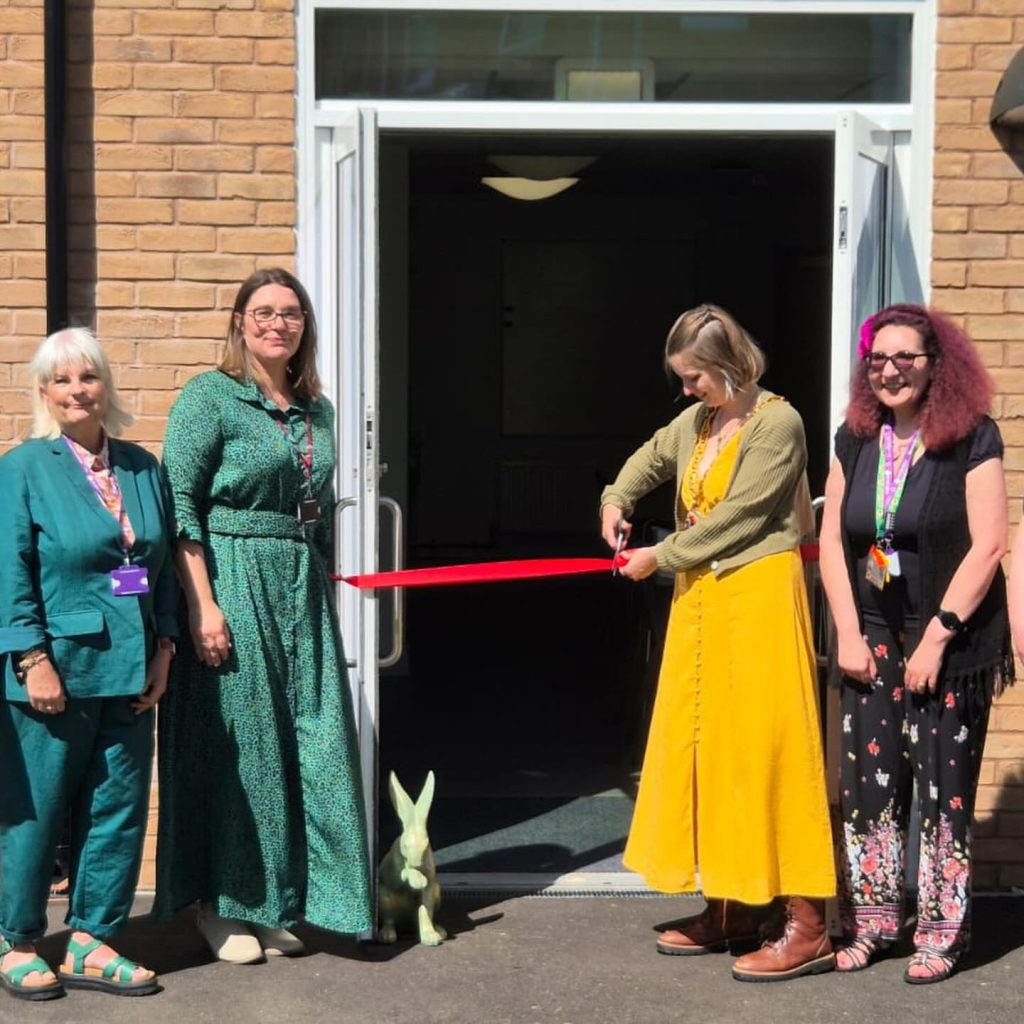
On Friday 22 May 2026, Lisa Ventura MBE FCIIS, Founder of Neuro Unity, was invited to officially open the newly refurbished and extended Fairfield Learning Centre in Warndon, Worcester. The centre, run by Learning Services Worcestershire as part of Worcestershire County Council’s Skills and Employability service, supports young adults, adult learners and those with additional needs in one of the city’s more deprived communities. Lisa was asked to deliver the lead speech and formally declare the centre open, a role she was honoured to take on given her work advocating for neuroinclusion and her own lived experience as a neurodivergent person. In this post, she shares what she saw, what it meant to her, and why the Fairfield Learning Centre represents exactly the kind of neuroinclusive thinking that Neuro Unity exists to champion.
There are moments that catch you off guard. You walk into a room, or in this case a newly refurbished centre in a quiet corner of Worcester, and something shifts. Not dramatically. Not with fanfare. Just quietly and unmistakably, you feel it: this place was built with people like me in mind.
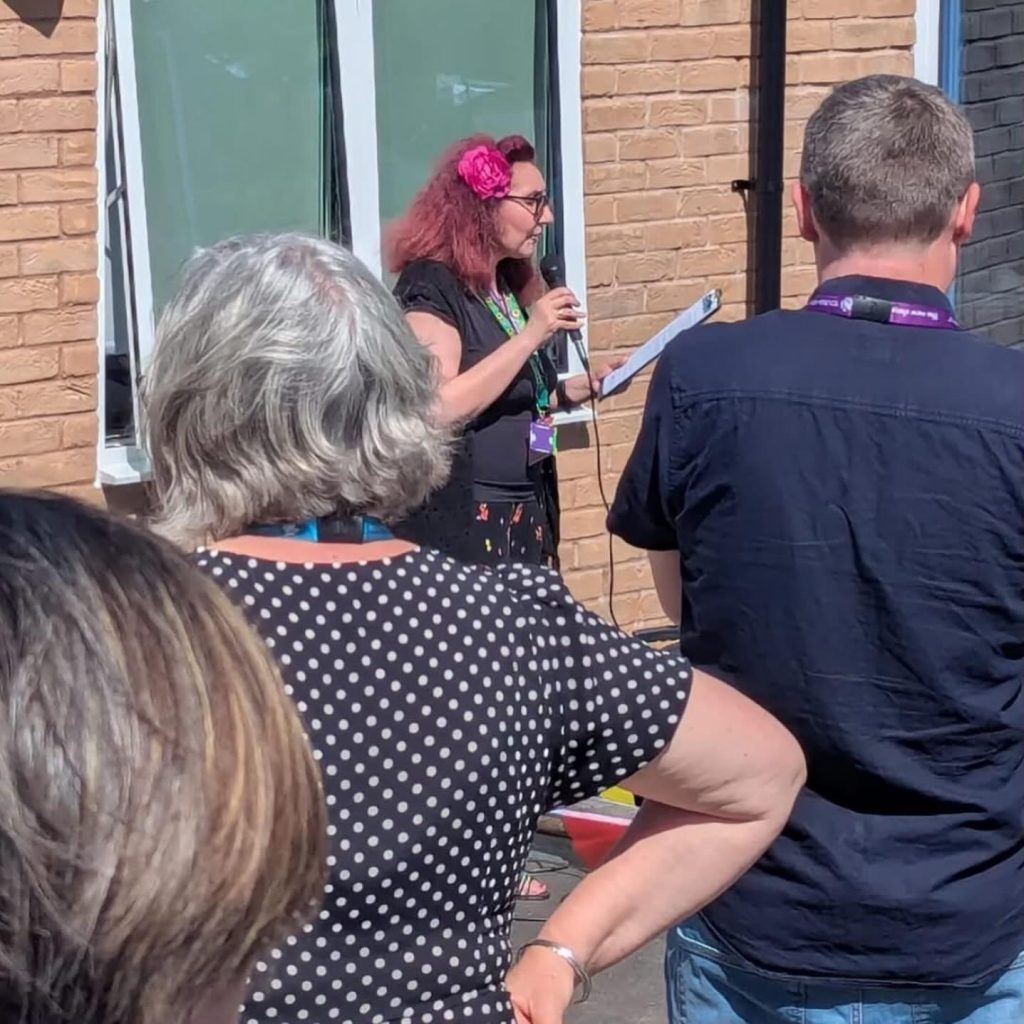
That is what happened when I visited the Fairfield Learning Centre in Warndon on Friday 22 May 2026, where I was invited to deliver the lead speech and formally declare the new extension open. It was an incredibly hot afternoon, the kind of May Day that the UK occasionally produces to remind you summer is possible (which made my heat sensitivity go into overdrive) and the centre was full of staff, learners, councillors and community members who had come to mark the occasion together.
I am writing about it here on the Neuro Unity blog because what I saw at Fairfield is not just a good news story about a building. It is a story about what neuroinclusion looks like when it moves from principle into practice. And that is something worth talking about.
Starting From the Person, not the Expectation
One of the things I speak about most often in my work with Neuro Unity is the gap between intention and environment. Many organisations and institutions say they support neurodivergent people. Far fewer have actually thought through what that support looks like on the ground, in the day-to-day experience of someone whose brain processes the world differently.
Fairfield Learning Centre has clearly done that thinking.
The centre serves a genuinely diverse community, including young adults aged 16 to 19 (and up to 24 for those with an Education, Health and Care Plan) who have found traditional learning settings difficult, adults returning to education through Skills for Life provision, and learners with additional needs supported through specialist tailored learning. That breadth matters. It speaks to a model that does not assume a single type of learner, a single pace, a single way of engaging.
What struck me most on my tour was not the new facilities themselves, impressive as they are, but the thinking behind them. A garden where learners grow vegetables and then learn to cook with them. A beauty and hairdressing area that connects learning to real and tangible outcomes. And a wellbeing room, quiet and purpose-built, where someone who is overwhelmed can step away, breathe, and be supported without judgement.
I will be honest, when I walked into that wellbeing room, I felt it. That lump in your throat when something lands in a way you were not expecting. I didn’t have access to anything like that when I was growing up and at school. I have PTSD from the experience of sitting my GCSEs in a vast echoing hall, rows of desks, invigilators pacing, the sensory overload of it all. I would have sat those exams so differently, so much more capably, if someone had simply offered me a quiet room and one other person in it. A space like the one at Fairfield could have changed everything.
What Neuroinclusion Actually Looks Like in Practice
At Neuro Unity, we talk a lot about the difference between accommodation and belonging. Accommodation is when the system makes a small adjustment to keep you in a process that was not designed for you. Belonging is when the process itself has been thought through with you in mind from the start.
What I saw at Fairfield felt much closer to belonging.
The staff I spoke to had warmth and genuine commitment running through everything they said and did. These were not people delivering a policy. These were people who had chosen to work in a place where their purpose was to create the right conditions for someone else to thrive. It was a place I could see myself working in and thriving, should I ever want to do something away from the cyber security industry. That matters enormously to neurodivergent learners, for whom the relationship with the person in the room is often just as significant as the content being taught.
The Towns Fund investment and support from Worcestershire County Council and Public Health have given the centre something tangible: better teaching environments, improved digital infrastructure, accessible spaces designed to be used. Warndon is a community where qualification levels have historically been lower than the county average and where opportunity has not always been easy to reach. Directing this kind of investment here is a statement that those who live in this community deserve the same quality of provision, the same consideration of their needs, as anyone else.
It is a neuroinclusion argument too, because neurodivergent people are disproportionately represented among those who have been failed by mainstream education. Many of us, including myself, have been labelled difficult, slow, or disruptive, when the truth is simply that the environment doesn’t fit us or cater to our strengths and needs. Fairfield is doing something about that.
Why This Aligns With What Neuro Unity Stands For
Neuro Unity exists to build a world where neurodivergent people are understood, valued and given the genuine opportunity to contribute. Not despite their neurodivergence, but as people who bring particular strengths, perspectives and ways of thinking that have real value when the conditions are right.
That vision requires the same thing the Fairfield Learning Centre is trying to deliver: environments that start from the question “how do we create the conditions for this person to thrive?” rather than “why can’t this person fit in?”
It requires educators and employers and communities to stop treating difference as deficit. It requires practical, visible, thoughtful investment in the spaces and structures that make learning and work accessible. It requires people in positions of influence to use that influence, to say clearly and in public that neurodivergent people matter, that their potential is real and worth investing in, and that the barriers in their way are worth removing.
That is what I tried to say in my speech on Friday. It is what I try to say through Neuro Unity every day. And it is what the team at Fairfield Learning Centre is saying through the work they do, week in and week out, in a community that needs it.
A Final Thought
I left a little earlier than I had planned because the heat reached the point where my neurodivergent nervous system politely but firmly told me it was time to go. But I left feeling something I do not always feel after public events: genuinely moved, and genuinely hopeful.
If you are in Worcester, or if you know someone who might benefit from what Fairfield offers, I encourage you to look them up via Learning Services Worcestershire. And if you are involved in designing learning environments, workplaces or community spaces, I would encourage you to visit somewhere like this and ask yourself honestly: does our space start from the person? Does it ask how someone can thrive, or does it simply assume that everyone arrives ready to fit in?
The Fairfield Learning Centre is a small but meaningful answer to that question. And for those of us who have spent our lives not quite fitting in, small but meaningful is everything.
Lisa Ventura MBE FCIIS is the Founder of Neuro Unity, a community dedicated to neuroinclusion and the empowerment of neurodivergent people in all areas of life. Find out more at www.neurounity.org.uk.